Curatorial
- Home
- Curatorial
Curatorial Statement:
Curatorial Statement: Rethinking Curation as Pedagogical Practice
My curatorial practice positions the exhibition as a pedagogical site—an environment structured not only to present objects, but to generate inquiry, relation, and meaning. I approach curating as a form of world-building: a process of organizing encounters among artworks, histories, and audiences that invites critical reflection on how knowledge is produced, circulated, and felt.
Each project is conceived as a curriculum. Exhibitions function as multimodal and embodied learning environments in which objects, images, texts, and spatial arrangements operate as forms of knowledge. By placing works in relation across geographies, temporalities, and disciplines, I examine how meaning emerges through juxtaposition, tension, and dialogue. This approach draws on object-based learning and arts-based research, extending curatorial practice beyond display toward inquiry.
Central to my work is the belief that audiences are not passive viewers, but co-constructors of meaning. I design exhibitions that invite participation, interpretation, and critical engagement—foregrounding the social and relational dimensions of looking. In this way, curatorial practice becomes a collaborative process, one that challenges dominant narratives while making space for underrepresented and historically marginalized perspectives.
My work is shaped by an interdisciplinary framework grounded in Black studies, critical pedagogy, and feminist thought. These fields inform my commitment to examining how power operates within visual culture and cultural institutions, and how exhibitions can intervene in those structures. I am particularly interested in how artistic practices function as sites of knowledge production—how artists theorize, archive, and reimagine the world through creative and aesthetic praxes.
The relationship between curator and educator is foundational to my approach. Both roles involve guiding encounters with complex ideas and fostering conditions for critical reflection. As such, I understand curating as an extension of teaching: a practice that structures experiences, poses questions, and opens space for multiple ways of knowing.
My academic training across art history, curatorial practice, and interdisciplinary studies—including work at Columbia University, The Graduate Center, and New York University—has informed this approach, enabling me to integrate critical theory with practice. Across institutional and independent projects, I remain committed to developing exhibitions that are intellectually rigorous, socially responsive, and pedagogically generative.
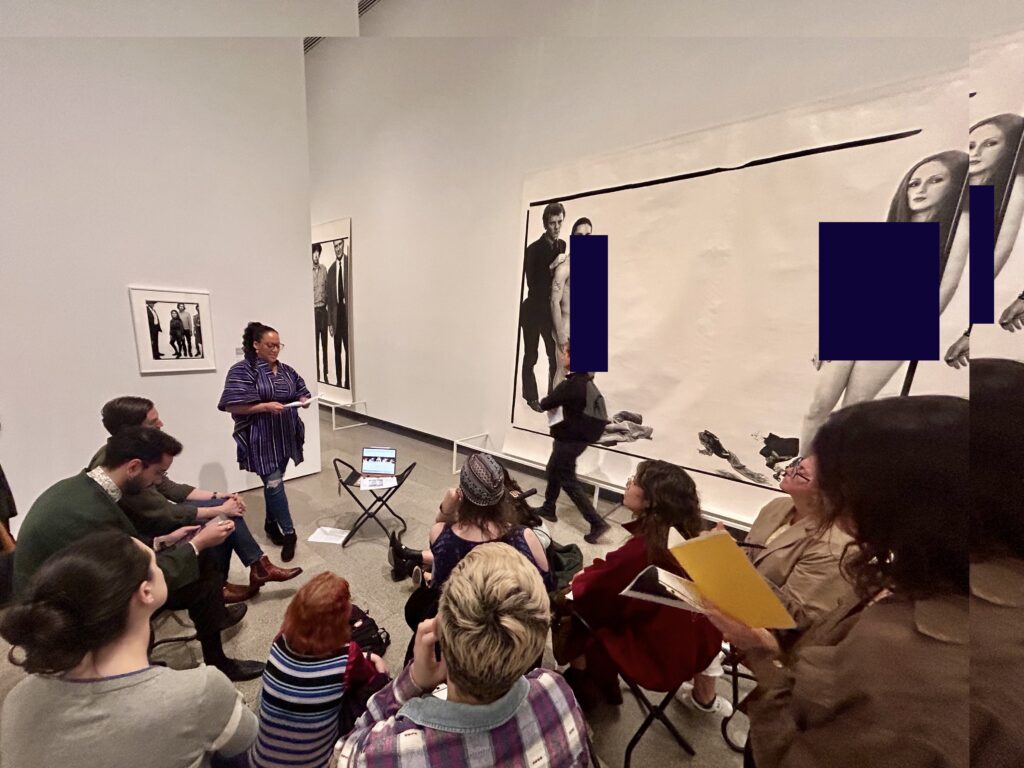
Metropolitan Museum of New York
During my time in the program, I conducted comprehensive research on institutional materials and social-cultural archiving methods, which informed my approach to exhibition planning, collection development, and gallery presentations. I also actively participated in a study day with curators from the Museum of Fine Arts (MFA) in Boston, where we explored curatorial strategies behind the “Hear Me Now” exhibit, comparing curatorial approaches between institutions.
Additionally, I crafted an art acquisition proposal report for the permanent collection, along with a proposed exhibition and programming, aimed at contextualizing diverse artistic voices and celebrating the cultural significance of the artwork.
I further deepened my curatorial perspective by attending study days at the Leonard A. Lauder Research Center for Modern Art, the Picasso Celebration Workshop for Graduate Students, and sessions on the Harlem Renaissance and Transatlantic Modernism led by Denise Murrell
Exhibitions
SELECT MUSEUM AND GALLERY EXHIBITIONS
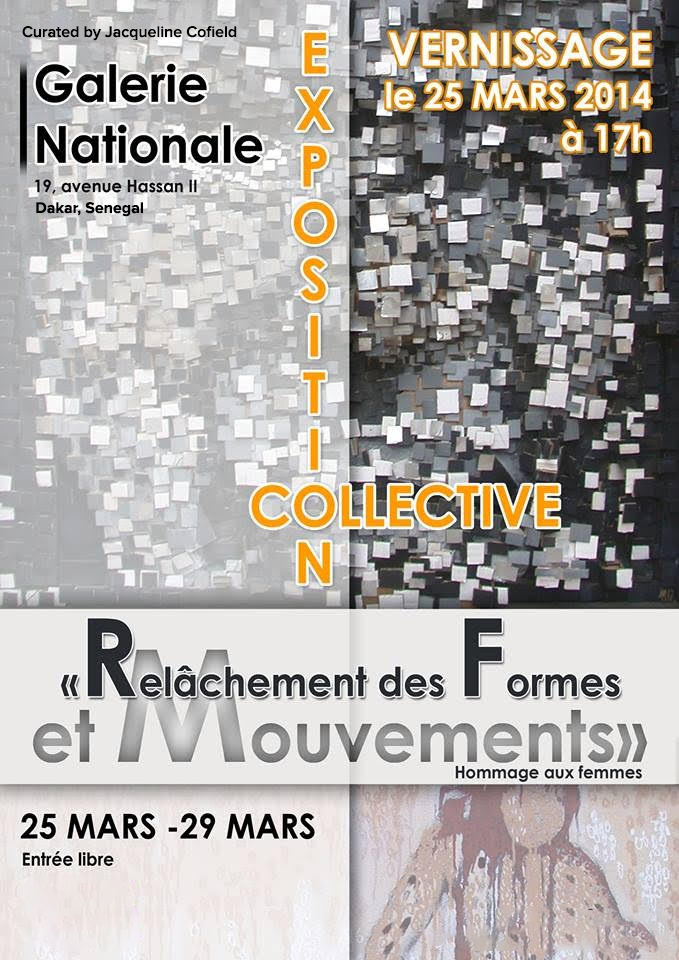
- An Artist Showcase, Give1Project International headquarters, Dakar, Senegal (2015), Curator
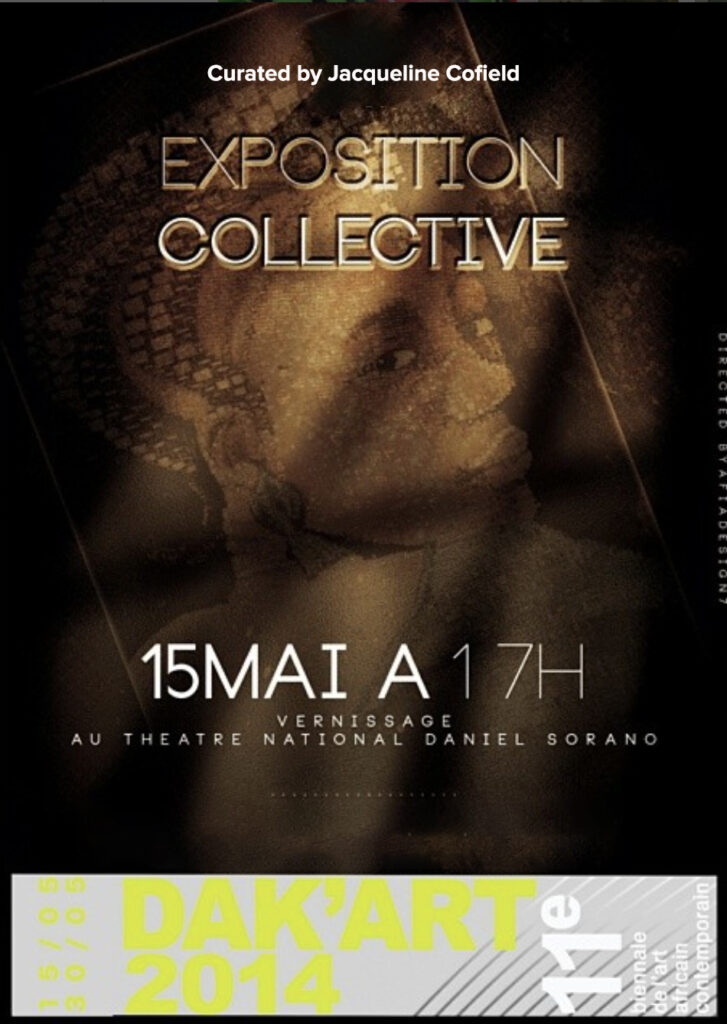
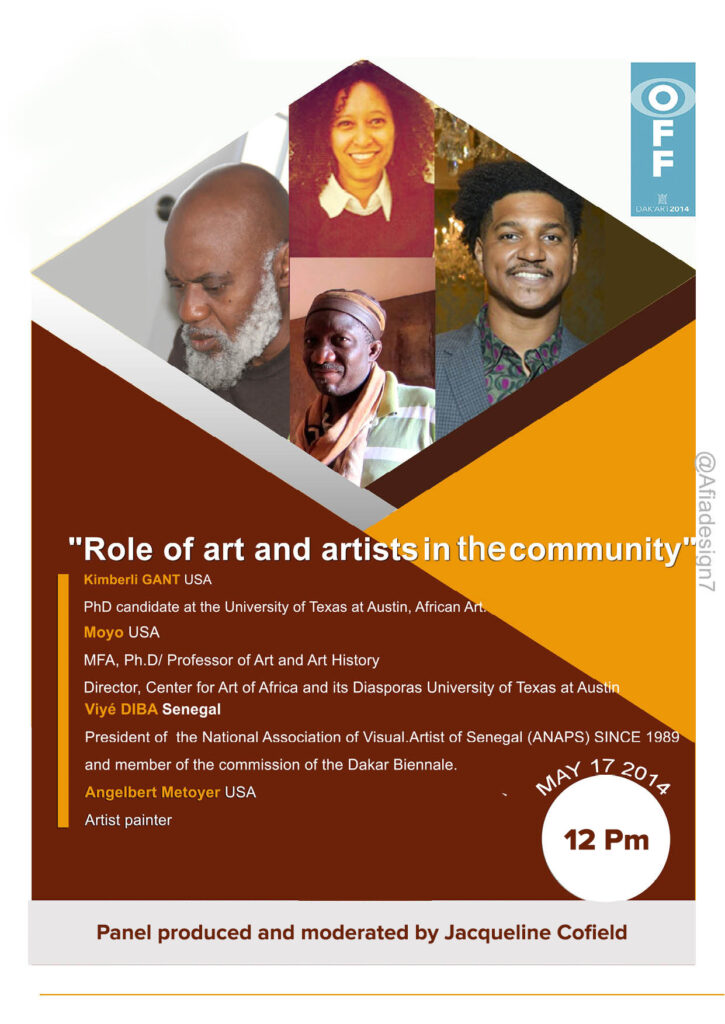
- Dak’Art biennale Give1Arts group show exhibition, at National Sorano Theater, Dakar, Senegal (2014), Curator
- Legacy ‘64 Ripple Art Exhibit, Oak Hill Country Club, Rochester, NY, (2017), Curator
- Grand Opening, N’Namdi Center for Contemporary Art, Detroit, MI (2010), Curatorial Assistant
- Chasing the Light, Deborah Dancy solo exhibition, G.R. N’Namdi Gallery, Chicago, IL, (2009) Curatorial Assistant
- M Windows, Angelbert Metoyer solo exhibition featuring G.R. N’Namdi Gallery, Chicago, IL, (2009) Curatorial Assistant
- Permission, Gregory Coates solo exhibition, G.R. N’Namdi Gallery, Chicago, IL, (2009) Curatorial Assistant
- Forms of Abstraction, G.R. N’Namdi Gallery, The Hamptons, NY, (2009) Curatorial Assistant
- Summer Art Series, G.R. N’Namdi Gallery, The Hamptons, NY, (2008) Curatorial Assistant
- Outside the Box, D’Fine Arts, New York, NY, (2006), Curator
- An Artist Showcase, D’Fine Arts, New York, NY (2005), Curator
Research Interests
Jacqueline’s research focuses on the intersections of arts, education, and culture. She explores how arts-based methodologies can enhance learning and foster a deeper understanding of diverse cultural perspectives. Her research interests cut across interdisciplinary studies, critical pedagogies, arts-based curriculum studies, and African diasporic arts.
Research Experience
- 2023-Present Co-Principal Doctoral Investigator (IRB pending), Department of Curriculum & Teaching, Teachers College, Columbia University | New York, NY. Mixed-methods research inquiry into maternal solidarity in graduate school: “Black and Asian mothers navigating academia and parenting.” Exploring emotional support, collaborative strategies, and advocacy for inclusive policies, contributing to racial justice and unity
- 2022-Present Podcast Partnership, Columbia University Libraries, Columbia University | New York, NY. Pioneered podcast Beyond Beauty, highlighting Global Majority women artists, from conception to partnership selection. Researched, conducted interviews, and managed audiovisual editing, transcription, and collaboration with relevant teams.
- 2022-Present Principal Doctoral Investigator for dissertation project (IRB approved), Department of Curriculum & Teaching, Teachers College, Columbia University | New York, NY. Executed "Beyond Beauty: Epistemologies and Aesthetic Praxes of Black Women Artists," an arts-based dissertation study exploring diverse knowledge and expertise of Black women artists. Successfully defended my thesis proposal before a panel of 3 faculty and 10 doctoral researchers.
- 2022 Graduate Research Assistant, Southern Illinois University Edwardsville | Edwardsville, IL. Remote collaboration on Black Women's Identities research with Dr. Angel Jones and 4 graduate associates. Analyzed interview data on responses to gendered-racial microaggressions
- 2020-2022 Graduate Research Assistant Participatory Creativity Research Lab, Social Justice Group, Creativity and Cognition in Department of Human Development, Teachers College, Columbia University | New York, NY (supervised by Dr. Michael Hanchett Hanson) Engaged in bimonthly research team meetings, presenting project updates and receiving feedback. Innovatively approached data collection and analysis methods to enhance scholarly work.
- 2020-2021 Graduate Research Assistant Equity Matters Teacher Inquiry Group, Department of Curriculum & Teaching, Teachers College, Columbia University | New York, NY (supervised by Dr. Marjorie Siegel) Engaged in collaborative action research with a team of one research associate and five school teachers, investigating teaching and learning experiences to understand challenges across diverse school settings.
- 2005-2006 Graduate Student Researcher, The City College of New York, City University of New York | New York, NY Conducted an IRB-approved experimental study with around 90 students in 3 middle school classrooms, assessing the effects of arts integration lessons on science concept comprehension.
- 2003 Graduate Student Researcher, Annenberg School for Communication, The University of Southern California | Los Angeles, CA Analyzed mixed-methods study results to evaluate museums' diversity efforts and audience attendance experiences. Conducted interviews with museum professionals and designed a survey involving 250 African-American participants to gather insights into museum attendance histories and experiences.
- 2001 Graduate Research Assistant, Annenberg School for Communication, The University of Southern California | Los Angeles, CA (supervised by Dr. Hernan Galperin) Conducted media content analyses on race representation in Latin American television.